Table of Content
If you want to cut your lob, bob or shoulder-length hair, this method involves bringing hair to the front and securing with small elastics before trimming off ends. Clean up any choppy ends with small, precise cuts for best results. Once you have completed the bottom-section of your hair, you can now move on to the top, and later, the front. Repeat steps one through five for each portion of hair, in each section until you are finished. The amount of hair trimmed is up to you.Standing in front of a mirror helps when you are trimming your own hair.
Check to see if you like that length or if you want it to be a wee bit longer. Cut just a little bit at a time, and you won't accidentally wind up with a hack job. Following these tips won't end in a hair disaster, but you will make a mess, so choose the setting for your DIY haircut wisely.
Read these stylists' tips before you pick up a pair of scissors.
If you make a mistake while cutting, don't worry—you can always go to a hairstylist or salon. They can assess the cuts made and blend your hair into a new, clean hairstyle. The best time to cut your hair is when it's damp, but not soaking wet.

Holding the bottom of your hair firmly in one hand, hold scissors in the other hand and use them to cut through your hair. Using the previously cut section as a guide, pull a small amount of hair into parallel to the first cut section, and cut accordingly. Continue taking parallel sections, using a small piece of the last cut section as a guide. Refine the edges when you are done so that it is even and balanced. Avoid putting any products into your dry hair before cutting it, as these could make it more difficult to properly evaluate your cut.
How to Dye Your Hair at Home (Even Though You Probably Shouldn’t)
Brook recommends starting your trim just below your brows but above your lash-line. Start by taking just the middle section—and clipping the sides out of the way—so you can set the length. "Twist the section and take the tip of your scissors and cut into the ends of the hair to remove some length. Hold thicker sections between your fingers as you cut," she says.

And, for those going for a pixie cut, get some good clippers and a few different size attachments. Read on for valuable advice that will make your haircut a success. Then watch handpicked video tutorials that will teach you how to cut bangs, layer your hair, buzz cut your own hair, and even get a bob or a pixie cut at home. Comb all of your hair to the very top of your head and twist it tightly. The cut requires basic tools, can be done alone, and works well on long, straight hair.
Tips
We may earn commission from the links on this page. Thanks to all authors for creating a page that has been read 617,121 times. Thanks to all authors for creating a page that has been read 2,260,569 times. Use a handheld mirror to examine your neckline after tapering it to make sure it looks neat and even. Be gentle on your head while cutting the crown, which is usually more tender than the rest of the head.
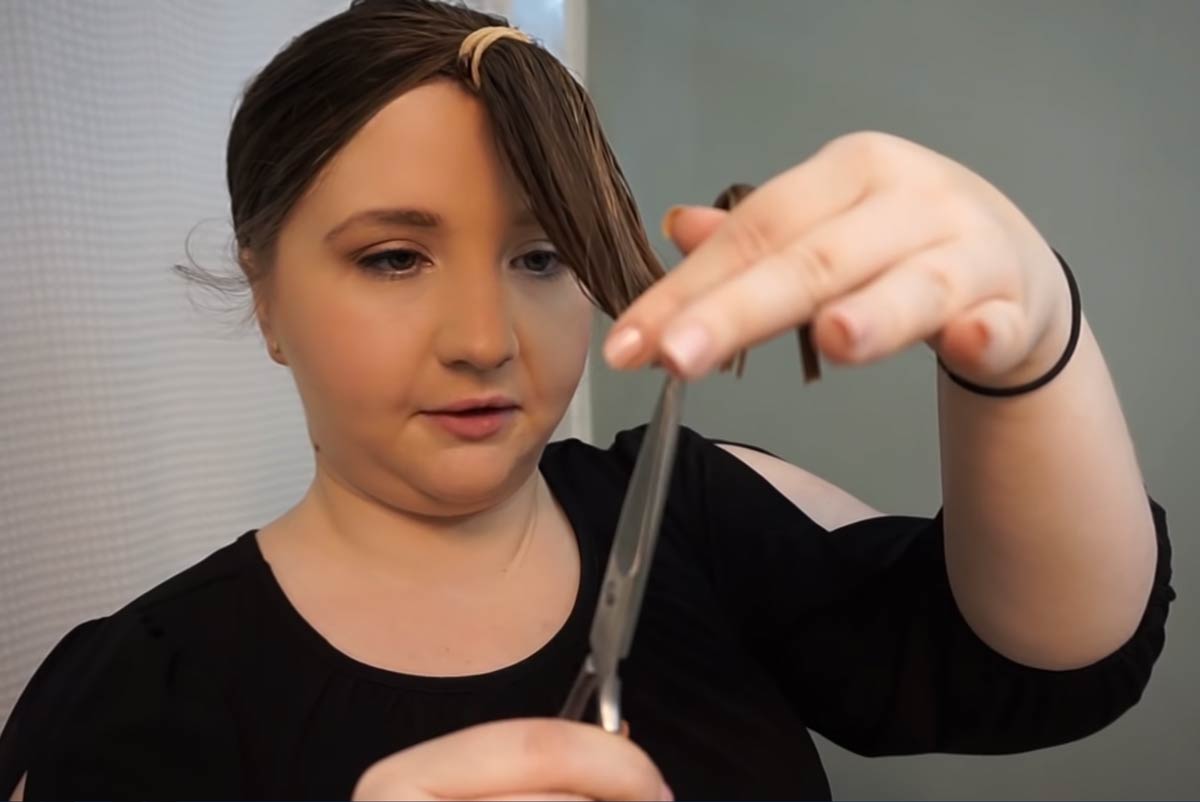
Hair above this part is considered the top, while the hair that falls below is referred to as the bottom. Use ties or bands to form pony tails that draw the hair away from the back of your head. If cutting over your bathroom sink, close the drain to keep hair from falling into it.
Things You’ll Need
Just hold the high ponytail up over your head in one hand as you follow the rest of these steps. Comb sections straight up or forward to check for evenness. If the cut is not as even as you'd like it to be, you can try putting it in a ponytail and trimming it again. Do not cut it any shorter; just put it back in the ponytail, hold it firmly in one hand, and clip any stray hairs that aren't even with the others. Using clean, sharp, salon quality scissors or sheers, even out the ends of your hair by making a cut that is parallel to your pinched fingers.
When point-cutting into the ends, hold the scissors at a 45 degree angle to the hair. Once you've cut each pigtail, you'll notice that your hair comes to a point at the back.If you like the V-shape at the back of your hair, move on to the next step. If you don't like it, you can remove the point by tying your hair into a single ponytail at the nape of your neck, and then clipping off the point.
For instance, if you have curly hair but always wear it blown out, you'll want to cut it while it's blown out. The last thing you need is to be left with a haircut that makes you more upset than the way it was before you messed with it. Leave a major chop up to the professionals, post-quarantine.
Using the first piece on the right as your guide, cut the second piece on that same side just a little bit shorter . Instead, cut downward at an angle, pointing the sheers toward your shoulder blade. Repeat on the left side, then make sure both strands match in length. Before you dive into your haircut, you'll need to make sure you have the proper tools at your disposal.
Now, trim damages and split ends of your hair without stretching any of it out with your fingers, a little like cutting a hedge. Once you’ve cut it all, brush your hair out again and trim any stragglers that are sticking out over the edges. Repeat these steps until all of your hair is the same length. If you want a longer fringe or bangs, comb out a section from the top of your hair before starting on the larger haircut.
If you're cutting your hair wet, shampoo and condition it, remove excess water by wrapping your hair in a towel and squeezing it, then comb your damp hair straight. An undercut style is by far the easiest haircut to try at home and it can make a huge difference in managing and cutting thick hair. Learning to trim the nape of your head will also be useful if you’re trying to maintain or grow out a pixie cut. If you have long hair and you’ve been wondering how to cut your own hair in layers, bobbles are the answer.
If you don't want bangs, move to the next step.How you cut your bangs will depend on the style of your pixie cut. For wispy bangs that blend with your pixie cut, cut into your fringe at a 75-degree angle while moving diagonally across your face. Decide whether you want to dry or wet cut your hair. Many professionals recommend cutting your hair wet, as it is easier to manage and control.


No comments:
Post a Comment